




Luxury and Lifestyle Hotels: Where the Next Hotel Value Cycle Will Be Created
By David Zaltzman
Luxury and lifestyle hotels are no longer simply the most aspirational corner of hospitality. They are becoming one of the most important arenas for hotel owners, investors, developers, and operators seeking pricing power, differentiated demand, and long-term asset value.
The global hotel industry is entering a more selective phase. Broad post-pandemic recovery has matured; in many markets, occupancy growth is moderating, operating costs remain elevated, and new supply is becoming more visible. Yet capital is continuing to flow to exceptional luxury hotels, destination resorts, trophy urban assets, branded residences, and lifestyle-led properties that offer a clear point of difference.
The reason is straightforward: the best luxury and lifestyle hotels are not competing merely on room count or location. They compete on emotional relevance, service design, cultural credibility, wellness, culinary distinction, privacy, and a guest experience that supports materially stronger ADR.
For investors, that can make the right asset extraordinarily valuable. For operators, it raises the standard of execution. For hospitality professionals, it expands career paths across a much broader spectrum of luxury than the traditional five-star model.
The key is to understand that “luxury” is not one category.
Luxury is not a single market
The hospitality industry often uses the word luxury as if every premium hotel operates according to the same rules. It does not.
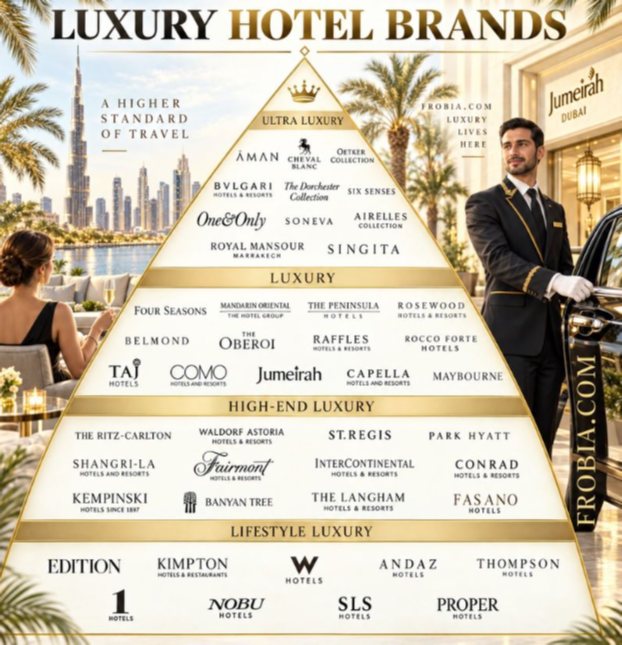
A highly private Aman resort, an iconic Four Seasons city hotel, a Ritz-Carlton convention property, and an EDITION lifestyle hotel may all serve affluent guests. But they generate demand differently, operate with different labor models, use different distribution strategies, require different capital programs, and offer very different investment propositions. A practical way to view the market is through four broad segments.
| Segment | Representative brands | Core guest proposition | Typical investment profile |
|---|---|---|---|
| Ultra-luxury | Aman, Cheval Blanc, Bvlgari, One&Only, Oetker Collection, Soneva, Six Senses | Exceptional privacy, highly individualized service, rare locations, deep emotional and experiential value | Scarce, capital-intensive, often resort-led, high ADR potential, limited scale |
| Luxury | Four Seasons, Mandarin Oriental, Rosewood, Peninsula, Raffles, Belmond, Oberoi, Capella, Maybourne | Global recognition, refined service, strong food and beverage, wellness, iconic locations | Trophy urban and resort assets, brand equity, powerful rate integrity |
| High-end luxury | Ritz-Carlton, St. Regis, Waldorf Astoria, Park Hyatt, Fairmont, Conrad, Shangri-La, InterContinental | Full-service global luxury, meetings and events capability, loyalty and distribution strength | Often more scalable, strong group and corporate potential, operating complexity |
| Lifestyle luxury | EDITION, Kimpton, W Hotels, Andaz, Thompson, 1 Hotels, Nobu, SLS, Proper | Design, culture, social energy, local relevance, culinary and entertainment-led experiences | Strong conversion potential, urban and resort appeal, brand-sensitive execution |
The hierarchy is not about declaring one brand universally “better” than another. It is about understanding the operating promise and economic model behind the name.
Aman may command extraordinary ADR because guests value privacy, space, serenity, and individual recognition. A Ritz-Carlton may generate enormous value through large-scale meetings, corporate relationships, loyalty distribution, and consistent luxury standards. EDITION or Kimpton may create a premium through design, food and beverage, nightlife, and cultural relevance.
Each can succeed. Each requires a different ownership thesis.
Why luxury is attracting capital
Luxury hotels are benefiting from a structural demand advantage: affluent travelers have demonstrated greater resilience than mass-market travelers, particularly when travel is tied to experiences, wellbeing, family gatherings, celebrations, and personal transformation.
JLL expects global hotel investment activity to continue rising in 2026, supported by stronger debt markets, renewed investor confidence, and more available capital. Its outlook specifically identifies luxury resorts and high-quality assets in prime locations as favored targets, even as performance varies more widely across markets.
Global hotel transaction volume in 2025 was approximately 22% above the 2023 trough, with stronger liquidity and improving financing conditions expected to support activity in 2026. Large hotel transactions above $250 million are also expected to become more common as financing markets improve and institutional capital re-enters high-quality hospitality.
Luxury is attractive because it offers several potential advantages:
- Greater ADR flexibility when the product is truly differentiated.
- Lower dependence on broad-based price-sensitive demand.
- Stronger ability to monetize suites, villas, residences, food and beverage, wellness, and experiences.
- More resilient demand from affluent leisure, family-office, corporate, and international travelers.
- Scarcity value when the hotel occupies an irreplaceable site.
- Better potential for global brand distribution and brand-residence integration.
However, luxury is not automatically defensive.
Luxury guests may be less price-sensitive, but they are highly experience-sensitive. A mediocre luxury hotel can quickly lose relevance if the service feels generic, the design becomes dated, the culinary offer lacks credibility, or the destination itself weakens. Luxury assets also require more capital, deeper staffing, stronger leadership, and continuous product investment.
The investment premium is earned through execution.
The development pipeline confirms confidence
The global hotel construction pipeline reached a record 15,976 projects and 2,433,948 rooms at the end of the second quarter of 2026. Of that total, 6,174 projects and more than 1.04 million rooms were under construction worldwide, while 3,743 projects were scheduled to start within the following 12 months.
Luxury is a meaningful contributor to that growth.
The global luxury pipeline reached a record 1,385 projects and 257,947 rooms in Q2 2026, up 8% by project count and 3% by room count year over year. The upper-upscale pipeline also grew 8%, reaching 1,923 projects.
This matters because it shows that developers are still willing to commit capital to premium lodging even as construction costs, debt underwriting, and operational expenses remain challenging.
But the pipeline must be read carefully.
A record pipeline does not mean a flood of luxury rooms will open immediately. More than 6,000 global projects remain in early planning, and these projects face financing, entitlement, design, procurement, and construction hurdles before they become direct competition. For investors, the most relevant supply measure is not the full pipeline. It is the number of directly competitive projects already under construction within the asset’s specific submarket.
A luxury resort in a supply-constrained coastal market may benefit from years of protection even if the national pipeline appears large. By contrast, an urban luxury hotel with several comparable branded projects already underway may face rate pressure sooner than headline
market data suggests.
The luxury guest has changed
The modern luxury traveler is not simply purchasing a larger room, a branded amenity, or a concierge desk. They are increasingly purchasing time, access, privacy, wellbeing, connection, and a sense of place.
Marriott’s Luxury Group, which includes brands such as Ritz-Carlton, St. Regis, Bvlgari, EDITION, and The Luxury Collection, has framed its 2026 strategy around wellbeing, connection, transformative experiences, and emotional resonance. The portfolio includes more than 550 luxury hotels and resorts across 72 countries and territories, with nearly 35 planned openings in 2026.
That positioning reflects a broader shift.
Guests are asking:
- Can this hotel help me recover, sleep better, and feel well?
- Does it offer privacy without feeling isolated?
- Is the food and beverage program a reason to stay here?
- Does the hotel connect me to the culture of the destination?
- Can I bring family or friends and still receive a seamless level of service?
- Does this property feel distinctive, rather than interchangeable?
- Is the experience worth the time and cost of the journey?
This is why wellness has evolved from a spa amenity to a primary reason for travel. It is also why luxury operators are investing more in longevity, sleep, movement, nutrition, recovery, mindfulness, and personalized wellbeing journeys.
The implication for owners is important: capital expenditure should follow the guest’s definition of value, not just historical brand standards.
An expensive lobby renovation may not produce the same return as redesigned suites, enhanced sleep programs, meaningful outdoor spaces, a stronger wellness concept, or a more compelling food and beverage venue. The right answer depends on the market, but the investment must improve the hotel’s ability to command rate and earn loyalty.
Lifestyle hotels are redefining premium demand
Lifestyle luxury is often misunderstood as luxury with louder music and better design. That is too simplistic.
A true lifestyle hotel creates a recognizable point of view. It may be rooted in architecture, local culture, food and beverage, music, fashion, sustainability, wellness, or a distinctive social environment. The property is designed not only to accommodate guests, but to create a reason for locals and travelers to gather.
Brands such as EDITION, Kimpton, W Hotels, Andaz, Thompson, 1 Hotels, Nobu, SLS, and Proper typically compete on this basis. Their strongest assets often function as both hotels and local destinations.
That can create meaningful value through:
- Premium ADR driven by design and experience.
- Strong food and beverage outlets.
- Rooftops, beach clubs, pools, and social spaces.
- Local event programming.
- Brand relevance among younger affluent travelers.
- Greater potential to attract non-room revenue.
- Conversion potential for well-located independent hotels.
But lifestyle hotels come with a warning: the product cannot be generic.
A luxury brand can often rely on consistency, service standards, and global recognition. A lifestyle hotel requires creative energy. If the restaurant is weak, the lobby is empty, the music feels dated, the design does not age well, or the local community does not embrace the
property, the concept can lose relevance quickly.
For owners, the question is not whether a lifestyle flag is fashionable. It is whether the brand’s point of view matches the specific neighborhood, building, guest profile, and operating capability.
The best lifestyle assets feel inevitable in their location. The worst feel imported.
Branded residences change the economics
One of the most consequential luxury trends is the growth of branded residences.
Branded residences allow developers to sell private homes connected to a hotel’s brand, services, and amenities. This can lower the effective equity requirement for a luxury resort or urban mixed-use development while creating a built-in ecosystem of owners, guests, and repeat users.
Accor’s luxury and lifestyle development leadership has identified branded residences as one of the most attractive opportunities for investors, citing a compound annual growth rate approaching 20%.
Industry reporting indicates there were 910 branded-residence programs at the end of 2025, compared with 764 one year earlier, and forecasts suggest more than 1,500 programs could exist by 2030. The growth reflects both consumer demand for branded service and developer demand for a capital model that can improve project feasibility.
For hotel investors, branded residences can offer important benefits:
- Upfront sales proceeds that reduce development capital needs.
- Higher perceived value through association with a luxury brand.
- Shared amenity and service infrastructure.
- Enhanced food and beverage, wellness, and retail ecosystems.
- A longer-term base of high-net-worth customers and advocates.
However, residences also create complexity. Owners must consider governance, service expectations, association economics, brand standards, owner usage rights, rental-program policies, and potential conflicts between hotel guests and residential owners.
The residence component can strengthen a luxury project. It can also become a distraction if the developer treats it merely as a financing tool rather than a long-term hospitality commitment.
The right brand depends on the asset
Owners often begin the brand-selection process with a question such as: “Which luxury brand
will create the highest ADR?”
That is not the right starting point.
The better question is: “Which brand can most credibly serve this location, this building, this customer base, and this investment strategy?”
A few examples illustrate the difference.
A secluded island, mountain, or desert resort may be suited to an ultra-luxury positioning where privacy, villa inventory, personalized service, and wellness justify a limited-key, high-ADR model.
A landmark city-center building near embassies, luxury retail, and cultural institutions may support a Four Seasons, Mandarin Oriental, Peninsula, Rosewood, or Raffles-style luxury proposition.
A major gateway city hotel with ballroom space, corporate demand, international distribution needs, and a significant meetings strategy may be better aligned with Ritz-Carlton, St. Regis, Waldorf Astoria, Fairmont, Park Hyatt, or Conrad.
A well-located independent urban hotel in a creative district may create more value through an EDITION, Kimpton, Thompson, Andaz, or 1 Hotels-style lifestyle approach than through a traditional luxury conversion.
The brand must support the business plan. It must not replace it.
What hotel investors should underwrite
Luxury and lifestyle assets require a different level of diligence than conventional select-service hotels.
The investment case should test more than occupancy and ADR. It should include:
- The durability of the property’s rate premium.
- Directly competitive luxury supply under construction.
- Suite, villa, and premium-room mix.
- Group, corporate, leisure, and international demand composition.
- Food and beverage contribution margin.
- Wellness, spa, beach club, golf, and ancillary revenue potential.
- Labor structure and service-level requirements.
- Management agreement and incentive-fee economics.
- Brand fees, loyalty costs, and distribution contribution.
- Required FF&E reserves and long-term capital planning.
- The property’s social relevance and local market acceptance.
- Branded-residence governance, if applicable.
- Environmental resilience, insurance exposure, and climate risk.
- Exit liquidity and likely buyer universe.
The most common mistake is to underwrite luxury based on the best recent year of ADR without understanding the capital required to maintain that positioning.
Luxury hotels are not “set it and forget it” assets. The guest expects renewal. The market expects originality. The staff must be trained continuously. The physical product must remain current. The brand relationship must be managed carefully.
The right luxury hotel can generate exceptional returns. The wrong luxury hotel can become an expensive operating problem.
The leadership equation
Luxury hospitality depends on people more than any other hotel category.
Technology can improve personalization, streamline requests, anticipate preferences, optimize revenue management, and reduce administrative friction. But it cannot replace a skilled concierge who understands discretion, a housekeeper who recognizes an individual guest’s routine, a restaurant leader who creates emotional connection, or a general manager who sets the tone for a complex service culture.
For hospitality professionals, the distinction between luxury segments matters greatly.
Ultra-luxury may offer intimate service environments, high levels of guest personalization, private villas, wellness, rare destinations, and deeply individualized guest relationships. It can be a remarkable training ground, but advancement may be slower because organizations are smaller and hierarchy can be flatter.
Global luxury and high-end luxury brands often offer broader mobility, formal leadership-development programs, international transfers, larger teams, sophisticated commercial platforms, and more clearly defined promotion paths.
Lifestyle luxury can offer exposure to design, food and beverage, events, entertainment, local partnerships, and entrepreneurial operating environments. It may move faster and reward creativity, but it also requires a strong understanding of brand culture and changing consumer expectations.
The “best” luxury hotel employer is therefore not determined by prestige alone. It depends on whether the professional wants privacy and personalization, structured global mobility, culinary and lifestyle energy, large-scale operations, or deep destination immersion.
The investment conclusion
Luxury and lifestyle hotels are likely to remain among the most compelling opportunities in global hospitality, but only for owners and operators who understand the distinction between a luxury name and a luxury business model.
The global development pipeline shows continuing confidence in luxury, with 1,385 projects and nearly 258,000 rooms in the luxury pipeline as of Q2 2026. Capital markets are improving, major transactions are expected to increase, and investors continue to favor prime luxury resorts, trophy properties, and differentiated high-quality hotels.
But success will not come from simply placing a luxury flag on a building. The best investments will be those that combine an irreplaceable location, a coherent brand fit, an authentic guest proposition, exceptional operational leadership, disciplined capital planning, and a durable ability to command rate.
For hotel owners, the question is not whether luxury is attractive. It is whether the asset can deliver the level of service, experience, and reinvestment that luxury demands. For investors, the question is not whether lifestyle hotels are popular. It is whether the specific
property can remain culturally relevant after the opening excitement fades.
And for hospitality professionals, the opportunity is broader than ever. The global luxury market now offers multiple paths: ultra-luxury intimacy, global luxury scale, high-end full-service complexity, and lifestyle creativity.
The future of luxury hospitality will not be defined solely by marble, butlers, or brand recognition. It will be defined by the ability to create experiences that are personal, memorable, relevant, and economically sustainable.
That is where the next generation of hotel value will be created.