




How Autonomous Retail Is Transforming Hotel Profitability and Guest Experience
By David Zaltzman
At 1:00 a.m., hospitality is tested in its most important moments. A guest returns late and needs a toothbrush. A family arriving from the airport wants snacks for the children. A conference attendee is looking for a quick meal after an evening session. These are small moments, but in hotels they represent real revenue, real service, and real guest satisfaction.
For years, many of those moments were missed simply because the retail model inside hotels was too limited. The shop closed too early. Staffing was inconsistent. The transaction took too long. The result was lost sales and missed opportunities to delight the guest.
That has already changed.
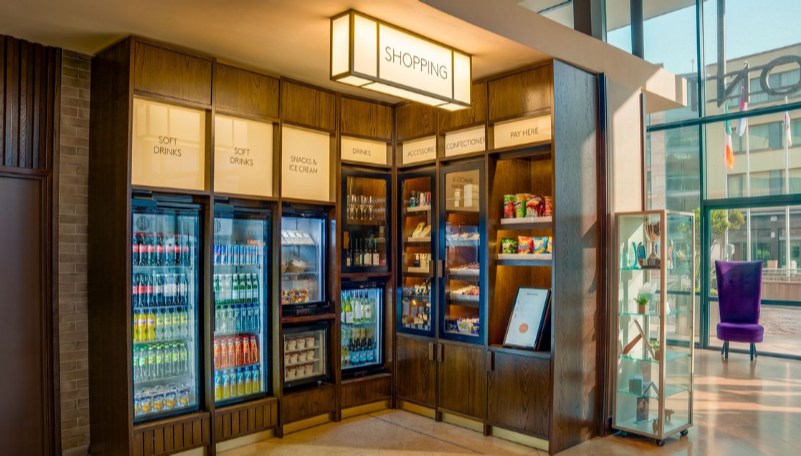
Autonomous retail is no longer a novelty. It is becoming a practical business strategy for hotels that want to improve profitability, extend service hours, and deliver a more seamless guest experience. In an industry where labor remains tight and margins are under pressure, checkout-free retail offers something rare: a way to grow revenue without adding friction.
The timing could not be better. Travelers today are increasingly comfortable with self-service. They check in on their phones, use digital keys, and expect convenience on demand. In that environment, walking into a hotel market, grabbing what you need, and leaving without standing in line feels less like innovation and more like common sense.
That shift matters because hotel retail has always been about more than convenience. It is about capturing demand that already exists. Most lobby market purchases happen outside normal business hours, when staffing is light and traditional service models are weakest. Autonomous retail helps hoteliers monetize those overnight and late-evening moments that were previously difficult to serve efficiently.
The best example is not theoretical. It is operational.
Hotels that have introduced checkout-free retail have reported meaningful lifts in retail performance, along with stronger guest perception and better use of staff time. Instead of keeping a team member behind a register, hotels can redirect people toward guest-facing roles that add more value across the property. That is important. Technology should not replace hospitality. It should free hospitality professionals to do what they do best: anticipate needs, solve problems, and create memorable stays.
For hotel owners and investors, the opportunity is broader than one outlet or one kiosk. Autonomous retail is part of a larger transformation in hotel monetization. The modern hotel is no longer just a room-selling business. It is a platform for multiple revenue streams: food and beverage, retail, upsells, digital services, parking, events, and ancillary spend. The operators who understand that will be better positioned to grow margins and strengthen asset value.
Of course, not every property will be the right fit for a checkout-free model. Scale, location, guest mix, and labor economics all matter. A limited-service property may do well with a simpler self-serve pantry or smart vending solution. A larger full-service or convention hotel may justify a more sophisticated autonomous retail experience. The key is not to adopt technology for its own sake, but to match the solution to the business case.
That distinction is critical. In hospitality, the best innovations are the ones that improve both the guest journey and the owner’s bottom line. Autonomous retail does exactly that when implemented thoughtfully. It removes friction, extends hours, and turns convenience into
measurable revenue.
For entrepreneurs, this is a reminder that hotel value creation increasingly comes from operational creativity. For investors, it is a signal that the best assets will be those that adapt fastest to new guest expectations. And for hotel executives, it is a call to think more holistically about how every square foot in a property can contribute to profitability.
The future of hotel retail is not about adding complexity. It is about removing barriers. Guests want speed. Owners want margin. Operators want efficiency. Autonomous retail has the potential to deliver all three.
In hospitality, that is not just a technology story. It is a business story.