




The Renovation Headache: How Hotel Owners Can Avoid Capital-Plan Surprises
By David Zaltzman
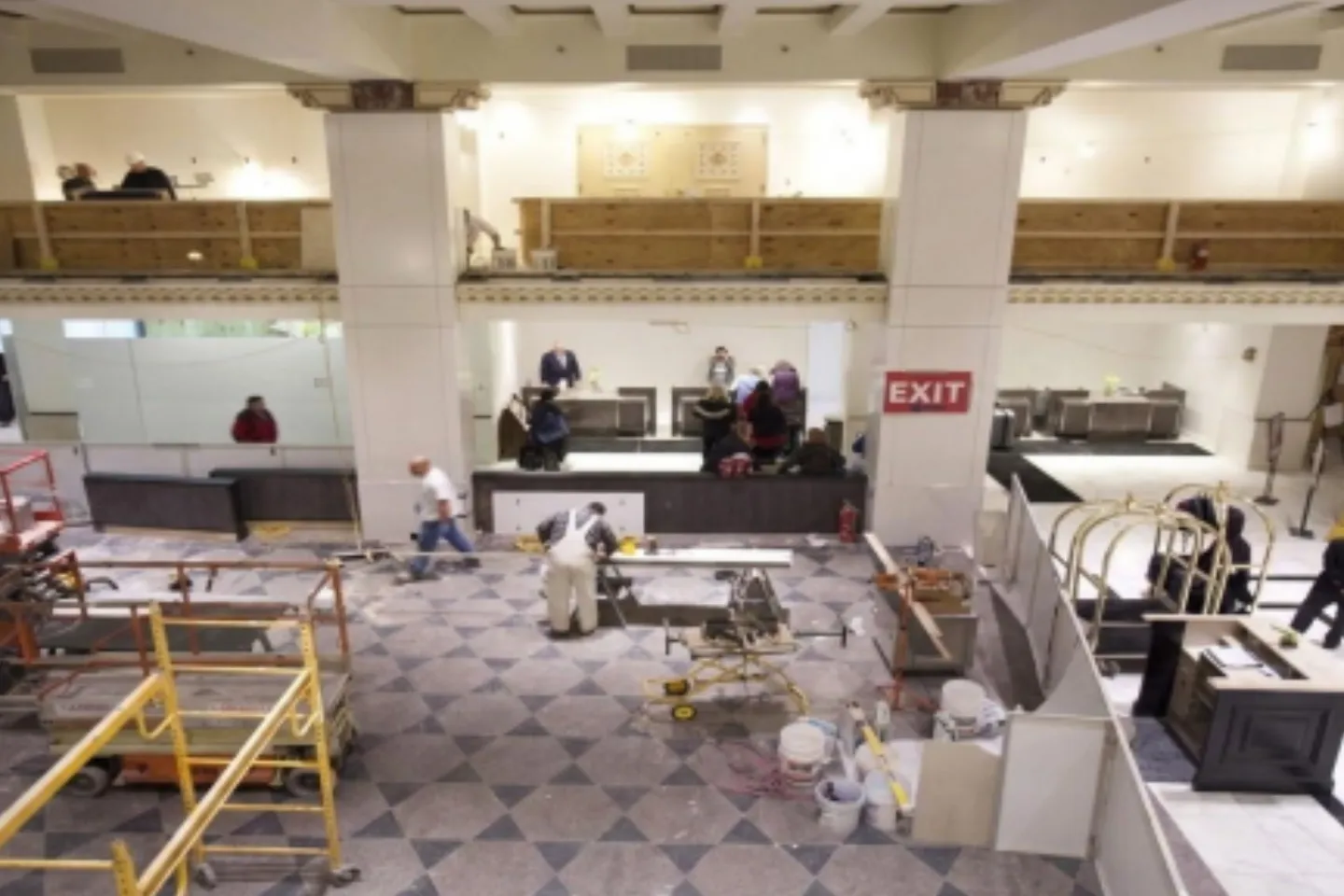
A hotel renovation is often approved at the point when it feels financially achievable, not necessarily when it is fully understood.
An owner receives a preliminary estimate, compares it with available reserves or financing capacity, and sees a path forward. Guestrooms will be refreshed, public spaces modernized, brand requirements addressed, and the property returned to a stronger competitive position.
Then the project enters design, engineering, procurement, and preconstruction.
What appeared to be a straightforward renovation becomes more complicated. Mechanical systems need attention. Electrical capacity does not support the new guestroom plan. Bathroom work exposes plumbing and waterproofing deficiencies. The brand requests additional finishes
or amenities. Furniture will not arrive in time. Construction access is limited because the hotel must remain open.
The cost increases not because the project suddenly changed, but because the owner is finally seeing the complete project.
For hotel owners, this is one of the most important lessons in capital planning: the accuracy of the budget depends entirely on the accuracy of the scope. A low initial estimate does not create value if the work behind it has not been fully identified.
The right approach is not to delay every renovation until every uncertainty is eliminated. That would be impossible. The objective is to discover the meaningful risks early enough to make intelligent decisions about cost, timing, operations, and expected return.
A renovation is more than a guestroom project
Hotel renovations are often described through the most visible elements: new furniture, carpeting, lighting, bathroom finishes, lobby design, restaurant improvements, or updated signage.
Those items matter because they shape the guest experience. But the visible work is often only part of the project.
A room renovation may require electrical changes to accommodate new lighting, outlets, charging stations, televisions, locks, and technology. A bathroom refresh can expose plumbing, drainage, waterproofing, ventilation, or accessibility issues. A new lobby concept may affect fire protection, mechanical systems, food-service equipment, guest circulation, or local permitting requirements.
In older properties, previous renovations may have been completed in phases by different ownership groups and contractors. Documentation may be incomplete. Systems may be nearing the end of their useful life. Materials behind walls or ceilings may not match the original drawings.
This is why owners should resist the temptation to rely only on per-room renovation benchmarks or a short property improvement plan. Those inputs are useful for early planning, but they should not be mistaken for a complete capital budget.
A brand-driven PIP identifies requirements necessary to maintain or obtain a flag. It does not necessarily capture the full cost of engineering, permits, site logistics, building conditions, operational phasing, freight, storage, or construction coordination. Detailed budgeting that directly ties each PIP line item to a defined scope produces stronger results and gives owners a clearer basis for discussions with both brands and contractors.
The first question for ownership should be: What work must be completed to deliver the intended guest experience, operate safely, protect the asset, and meet brand obligations?
Only then can the team ask: What will it cost?
Existing conditions can change the economics
Every renovation includes uncertainty. A hotel is a continuously operating building with thousands of daily interactions between guests, staff, mechanical systems, technology, and service infrastructure. Unlike new construction, renovation work begins with what is already there.
That is why existing-condition investigations are essential.
Owners should ask their team to assess the building envelope, roof, guestroom moisture issues, HVAC capacity, electrical panels, plumbing risers, life-safety systems, elevators, accessibility exposure, and technology infrastructure before finalizing the project scope. The level of investigation should match the age and complexity of the property.
A newer select-service hotel with a limited soft-goods refresh may carry relatively manageable risk. A full-service urban hotel with restaurants, meeting space, aging systems, and a major brand repositioning will require a far more detailed assessment.
The purpose is not to find reasons to avoid investment. It is to prevent ownership from approving a guestroom renovation only to discover later that the building requires additional mechanical, electrical, plumbing, or code work that was never included in the original number.
Contingency should be viewed as a disciplined part of planning, not as a sign that the project team lacks confidence. The appropriate amount will depend on the certainty of the drawings, the condition of the property, and the degree of intrusive work. Projects with limited documentation, older infrastructure, or major operational constraints require more contingency than highly defined renovation scopes.
Construction costs remain uneven in 2026. Overall escalation has moderated in many areas, but individual categories such as insulation, metals, and electrical components have shown sharper movement. A hotel budget cannot rely on broad market headlines because hotels require specialized products, customized finishes, branded items, guestroom technology, and precise installation sequencing.
The relevant question is not whether “construction costs are up.” It is whether the specific materials, trades, and systems needed for this hotel are priced and available when the project needs them.
Time is a cost category
Owners often focus on the construction contract value and overlook the economic impact of the schedule.
A hotel earns revenue every day. When rooms, meeting space, restaurants, fitness areas, pools, lobbies, or parking facilities are unavailable, the property loses the ability to serve guests and capture demand.
A 150-room hotel that removes 15 rooms from service for 90 days loses access to 1,350 room nights. At a $180 average daily rate, those rooms represent $243,000 in potential gross rooms revenue. The actual economic impact depends on occupancy, seasonality, and the amount of demand that could have been accommodated, but the calculation shows why phasing is an ownership issue, not only a contractor issue.
The timing of work can matter as much as the cost of work.
Removing rooms from service during a low-demand period may be economically sensible. Doing the same work during a convention, holiday period, sporting event, or seasonal peak can be far more expensive than the contractor’s bid suggests.
A proper project schedule should be coordinated with the hotel’s demand calendar. It should account for group commitments, corporate travel periods, major citywide events, local seasonality, brand deadlines, weather risks, and known high-occupancy dates.
The general manager, director of sales, revenue manager, chief engineer, and operations team should be involved in this process. They understand when the hotel can absorb disruption, which guests are most sensitive to noise or inconvenience, and where construction activity may interfere with housekeeping, breakfast, meetings, parking, or service delivery.
A renovation that technically finishes on time can still be a poor owner outcome if it compromises peak-period revenue, triggers negative reviews, or causes the hotel to decline profitable business.
Procurement should drive the plan
Furniture, fixtures, and equipment are often seen as a design decision followed by a purchasing task. In practice, procurement is one of the most important schedule and budget controls in a hotel renovation.
A room cannot be returned to inventory until all required components have arrived and are installed. One delayed casegood, lighting fixture, bathroom component, television, door lock, or window treatment can delay an entire floor’s reopening.
Lead times for hotel FF&E can range from 12 to 16 weeks or longer, depending on customization, supplier capacity, source country, transportation, brand approvals, and project size. This is particularly important for custom furniture, decorative lighting, guestroom doors, hardware, specialty bathroom products, restaurant equipment, and technology infrastructure.
Owners should identify long-lead items during the earliest stages of design. Each should have an approval date, order date, manufacturing date, shipping date, delivery date, inspection process, and installation sequence.
Procurement also needs to reflect the hotel’s operational reality. The property may require off-site storage, a secure receiving process, phased deliveries, temporary warehousing, and protection for products that arrive before the installation area is ready.
The cost of freight, storage, receiving, damage, replacement orders, and accelerated shipping can become meaningful if procurement is not planned alongside construction.
The best project teams do not ask, “When will the furniture arrive?” They ask, “What must be approved, ordered, delivered, and installed for each guestroom to be returned to sale on the planned date?”
The operating hotel requires a different approach
Most hotel owners cannot simply close their properties for a complete renovation. The hotel must continue to host guests, fulfill group commitments, serve breakfast, maintain safety, and protect its reputation while contractors work on site.
That makes a hotel renovation fundamentally different from work in an empty building.
Owners should prepare for costs related to room downtime, noise management, construction security, temporary signage, guest communication, additional engineering support, construction access, staging, cleaning, and service recovery.
They should also plan for how construction traffic will be separated from guest traffic. A schedule that requires contractors to use the same elevators, corridors, or service areas as guests may create delays, visible disruption, and safety concerns. A project may need night work, restricted work hours, or more expensive phased sequencing to preserve the guest experience.
These choices can increase the cost of construction. But they may reduce the larger economic cost of lost revenue, poor reviews, group cancellations, and long-term reputational damage.
The operating team should never be brought into the process only after the project has been approved. They need a formal role in developing the phasing plan, service-recovery approach, room-out-of-order strategy, access controls, and guest communication plan.
The property’s general manager should not be expected to act as the project manager while continuing to run the hotel. A qualified owner’s representative or project manager can coordinate the contractor, designer, procurement team, brand, and ownership group while the hotel team protects operations and guest satisfaction.
The investment plan must be clear
Some capital investment is defensive. A roof, elevator modernization, life-safety system, plumbing riser, or mechanical replacement may be required to protect the property, remain compliant, and avoid greater costs later.
Other capital is intended to improve commercial performance. Guestroom renovations, lobby upgrades, suite improvements, fitness and wellness investments, enhanced meeting technology, new food-and-beverage concepts, or upgraded outdoor amenities may support higher ADR, increased occupancy, better reviews, stronger group demand, or more ancillary revenue.
These two categories should not be measured in the same way.
Defensive investment should be evaluated through risk avoidance, asset preservation, brand compliance, and future capital protection. Revenue-oriented investment should have a commercial thesis.
Owners should ask:
- Which guests will value this improvement?
- Will the property gain rate, occupancy, length of stay, or ancillary spend? ● How does the project improve its position against the competitive set? ● Will the investment reduce maintenance, energy, or labor costs?
- What guest experience problem is being solved?
- What level of revenue disruption will occur during construction?
- How will the asset remain competitive after the project is complete?
A project does not need to produce immediate payback to be wise. But ownership should understand whether the purpose is preservation, compliance, rate growth, efficiency, or repositioning.
The most expensive capital project is often not the one with the highest contract value. It is the project that consumes capital, disrupts operations, and fails to create either a stronger guest proposition or a more resilient asset.
Preparing the 2027 capital plan
Hotel owners preparing for 2027 should focus on process before price.
Begin with a complete assessment of the asset. Separate mandatory brand items from building requirements, operational needs, and optional value-creation opportunities. Engage design, engineering, operations, procurement, and construction professionals early. Develop a detailed scope before comparing bids. Ensure contractors are pricing the same work. Identify long-lead items before committing to a schedule. Model room downtime and displaced revenue. Maintain an appropriate contingency. Establish clear authority for approving changes.
Most importantly, connect the renovation plan to the hotel’s long-term commercial strategy.
A renovation should not be viewed only as an expense required to keep the hotel current. It is a decision about the type of guest the hotel will attract, the rate it can command, the costs it will carry, and the value it can preserve or create over time.
The initial number may be appealing. But the number is only meaningful if it reflects the work required to achieve the outcome ownership expects.
A reliable hotel capital plan is not the plan with the smallest budget.
It is the plan that fully recognizes the building, the operation, the guest, and the investment behind the renovation.