




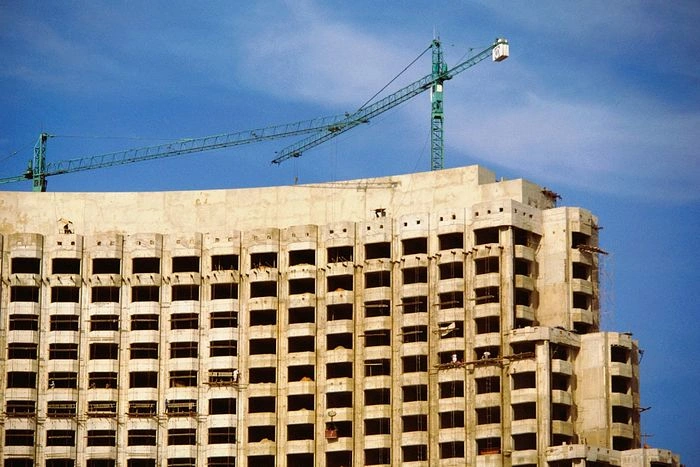
The Opportunity behind Hotel Construction
By David Zaltzman
The question I am being asked over and over this year is what a record hotel development pipeline really means for owners, investors and operators
There is no question that the hotel development pipeline both in the U.S. and Canada is large.
At the end of 2025, Lodging Econometrics reported 15,922 hotel projects representing approximately 2.44 million rooms worldwide. By the second quarter of 2026, that number had grown again to 15,976 projects and approximately 2.43 million rooms.
On the surface, those numbers are impressive. They also make for an easy headline.
But anyone who has actually developed, financed or operated a hotel knows that a project in a development pipeline is not the same thing as a hotel opening its doors.
Some projects are already under construction. Others are waiting for financing, permits or a construction start. And some will remain on paper indefinitely.
That distinction matters.
For hotel owners and investors, the real question is not how many rooms are in the pipeline. The real question is much more practical:
How many of those rooms will actually be delivered, where will they open, and who will they compete for?
That is where the opportunity starts to become interesting.
A big pipeline does not necessarily mean a big wave of new supply
At the end of 2025, approximately 6,140 hotel projects, representing about 1.06 million rooms, were under construction globally. Another 3,679 projects, representing approximately 507,000 rooms, were scheduled to begin construction within the following 12 months.
Lodging Econometrics expects approximately 2,617 new hotels, or 389,175 rooms, to open globally by the end of 2026. Another 2,630 hotels and 384,955 rooms are forecast to open in 2027.
Those numbers deserve attention, but they should not automatically be treated as future competitive supply.
Construction remains expensive. Financing is more selective than it was before the interest-rate shock. Developers are taking longer to make decisions, and projects that looked viable a few years ago may no longer work under today’s construction costs and financing terms.
This is an important distinction for hotel investors.
The development pipeline is a risk indicator. It is not a delivery schedule.
A market can have thousands of rooms in its announced pipeline and still remain undersupplied for years if those projects cannot get financed or built.
On the other hand, a market with a relatively modest pipeline can face a significant competitive challenge if most of those projects are already under construction.
That is why I believe investors need to look beyond the headline pipeline number.
Where is the development actually happening?
The United States and China continue to dominate global hotel development. Together, they represented approximately 59% of the global project pipeline at the end of the second quarter of 2026.
At the same time, markets such as India and Saudi Arabia, along with several countries across Asia-Pacific and the Middle East, continue to see strong development activity. Urban growth, infrastructure investment, domestic travel and increasing international visitation are all contributing to that expansion.
But there is another part of the story that I find particularly important.
It is not only the number of hotels being developed. It is what type of hotels are being developed.
Luxury and upper-upscale projects have reached historically high levels. Conversion activity is also growing rapidly.
At the end of 2025, the global conversion pipeline reached 2,815 projects and approximately 341,006 rooms. That represented year-over-year increases of 13% in projects and 14% in rooms. When renovation and conversion projects are combined, the total reached 3,777 projects and approximately 540,459 rooms.
That tells me something important about where the industry sees opportunity.
Not every hotel needs to be built from the ground up.
There are existing hotels, office buildings, apartment buildings and other assets that can potentially be converted into better-performing hospitality properties. In many cases, the ability to reuse an existing building can reduce both development time and some of the risks associated with ground-up construction.
For experienced hotel owners, this creates an interesting opportunity.
The next great hotel investment may already exist.
It may simply need the right capital, brand, positioning and operator to unlock its value.
Canada is growing, but the story is more measured
Canada is participating in the broader development cycle, but I would be careful about interpreting the Canadian numbers as a development free-for-all.
At the end of the first quarter of 2026, Canada had 331 projects representing 45,401 rooms in its pipeline. Of those, 64 projects and 8,125 rooms were under construction.
Lodging Econometrics forecast 39 new Canadian hotels and approximately 4,630 rooms to open during 2026, representing roughly 1.2% supply growth.
By the second quarter, Canada’s pipeline had grown to a record 345 projects and 47,874 rooms. That represented a 4% increase in projects and a 7% increase in rooms compared with the previous year.
But more than half of the pipeline, 178 projects and 25,422 rooms, was still in the early planning stage. Only 64 projects, representing 8,550 rooms, were under construction.
That difference is significant.
Ontario remains the country’s largest development market, with 190 projects and 27,627 rooms. Toronto alone accounted for 71 projects and 11,495 rooms.
Upper-midscale hotels represented the largest segment of Canada’s second-quarter pipeline, with 140 projects and 14,298 rooms.
I believe this reinforces the importance of select-service and extended-stay hotels in the Canadian market.
These formats can operate with leaner staffing models, appeal to both business and leisure travelers, and often make more sense in suburban markets and secondary cities where a traditional full-service hotel may be difficult to underwrite.
The Canadian outlook remains positive, but I would not describe it as euphoric.
CBRE expects Canadian RevPAR to remain positive in 2026, generally 2% to 4% above 2025 levels, with national ADR projected at approximately $216. Supply growth is also expected to increase, reaching 1.5% in 2026 and 2.1% in 2027.
For owners, that creates a more demanding environment.
Revenue can continue to grow, but simply being in the right market will not be enough.
Brand positioning, operating efficiency, cost control and the ability to capture the right customer will increasingly determine who wins.
More capital is coming back into hotels. That does not mean investors should lower their standards.
The investment environment is improving.
JLL’s 2026 outlook points to stronger debt markets, significant available capital, resilient travel demand and renewed investor confidence. Global hotel investment volumes have increased 22% from the 2023 trough, while global air passenger volumes are projected to grow 4.9% in 2026.
That is encouraging.
But there is a danger whenever capital starts coming back into a sector.
Competition increases.
And when competition increases, buyers can become too focused on the future and lose sight of the fundamentals of the asset they are actually buying.
The best investment is not necessarily the hotel with the most aggressive growth story.
It is often the hotel with durable cash flow, a strong location, limited competitive supply and identifiable operational upside.
In today’s market, I would be looking closely at several areas.
First, well-located hotels that can be acquired before transaction pricing fully reflects a broader recovery.
Second, properties where the renovation requirement is manageable and there is a realistic opportunity to reposition the asset or change its brand.
Third, conversion opportunities where an existing building can be turned into a stronger hospitality product.
Fourth, select-service and extended-stay hotels where the labor model provides a structural operating advantage.
And finally, markets where the development pipeline looks intimidating on paper, but where financing and construction challenges mean that much of the announced supply may never actually materialize.
There is a simple underwriting exercise that can help.
I would model the market three ways:
1. Assume every announced project gets built.
2. Assume only projects currently under construction are delivered.
3. Assume only projects under construction that directly compete with the subject hotel are delivered.
The difference between those three scenarios can have a meaningful impact on both hotel valuation and investment returns.
That is the kind of analysis I believe investors should be doing before they get excited about a development pipeline.
The operator still has an enormous advantage
New hotel supply will create competition. There is no avoiding that.
A new hotel typically arrives with a fresh product, modern technology, attractive public spaces and a significant opening marketing campaign.
An existing hotel cannot compete simply by waiting for the new hotel to open.
It has to earn its position every day.
That means protecting rate instead of automatically discounting. Understanding which customers are genuinely price-sensitive and which customers will pay for convenience, location and reliability.
It means controlling labor without damaging the guest experience.
It means looking beyond room revenue. Parking, breakfast, meeting space, retail, partnerships and other ancillary revenues can make a meaningful difference when occupancy growth is limited.
And perhaps most importantly, it means using data at the property level.
National hotel statistics are useful, but they do not run a hotel.
The local employer that is expanding. The hospital down the street. The new highway interchange. The convention calendar. The airline schedule. The competitor opening next year.
The booking window. The group business that is moving to another property.
Those details matter.
Capital planning matters just as much.
A renovation should not be viewed simply as a way to make a hotel look newer. The investment should have a purpose.
Can it support a higher ADR?
Can it improve guest satisfaction?
Can it reduce operating costs?
Can it increase conversion?
Can it make the property more attractive to a future buyer?
If the answer is none of those, it is worth questioning the investment.
Growth is no longer just about adding rooms
The hotel industry is entering a different stage of the cycle.
For several years, the conversation was largely about recovery. Occupancy was coming back, ADR was growing, transactions were beginning to move and investors were looking for the next opportunity.
Now the conversation is becoming more sophisticated.
Supply is returning.
Capital is returning.
Competition is returning.
That means the winners will not necessarily be the companies that build the most hotels or acquire the most rooms.
They will be the companies that make better decisions about where to invest, what to buy and how to operate.
In my view, the industry is moving from a volume-led recovery toward a quality-led expansion.
The right hotel in the right micro-market, operated exceptionally well, can outperform a much larger pipeline of mediocre opportunities.
For entrepreneurs, that means looking for mispriced real estate, overlooked conversion opportunities and assets where operating expertise can create value.
For investors, it means buying durable cash flow at a basis that does not depend on unrealistic assumptions.
For hotel executives, it means building organizations that can manage growth while also managing complexity.
The real opportunity is not in the biggest pipeline
A record hotel construction pipeline is ultimately a positive sign.
It tells us that developers believe in the future of travel. It tells us that capital is returning. And it tells us that there is still significant confidence in the long-term demand for hospitality.
But there is another message in those numbers.
More supply eventually means more competition.
Owners who ignore that reality may discover that a strong brand cannot compensate for a weak location. And a good location cannot fully protect an inefficient operation.
The real opportunity will be found in the gap between what the market says is coming and what actually gets delivered.
That is where experienced owners and operators have an advantage.
The future will not automatically belong to the markets with the largest construction pipelines.
It will belong to the markets where demand quality, supply discipline and operational execution come together.
And at the individual property level, the same principle applies.
The question is not simply whether more hotels are being built.
The better questions are:
Which projects will actually get built?
Which existing hotels are worth buying today?
Where can an operator create meaningful value?
And perhaps most importantly:
Which properties will still deserve a premium after the new supply finally arrives?
That is where I believe the next generation of hotel investment opportunities will be found.